The Mesoscale Analysis and Forecasting Group is involved
in a wide-ranging research program to understand and
predict atmospheric mesoscale and synoptic phenomena,
ranging from large-scale frontal and storm systems to
orographic features of scales ranging from one to hundreds
of kilometers. The group makes use of high-resolution
mesoscale models, such as WRF, and modern observational
tools to delineate atmospheric structure and dynamics.
Another major activity is the study of the meteorology
associated with western Washington wildfires. Use of
mesoscale ensembles for probabilistic prediction and data
assimilation is another major project, as is determining
the regional implications of global climate change.
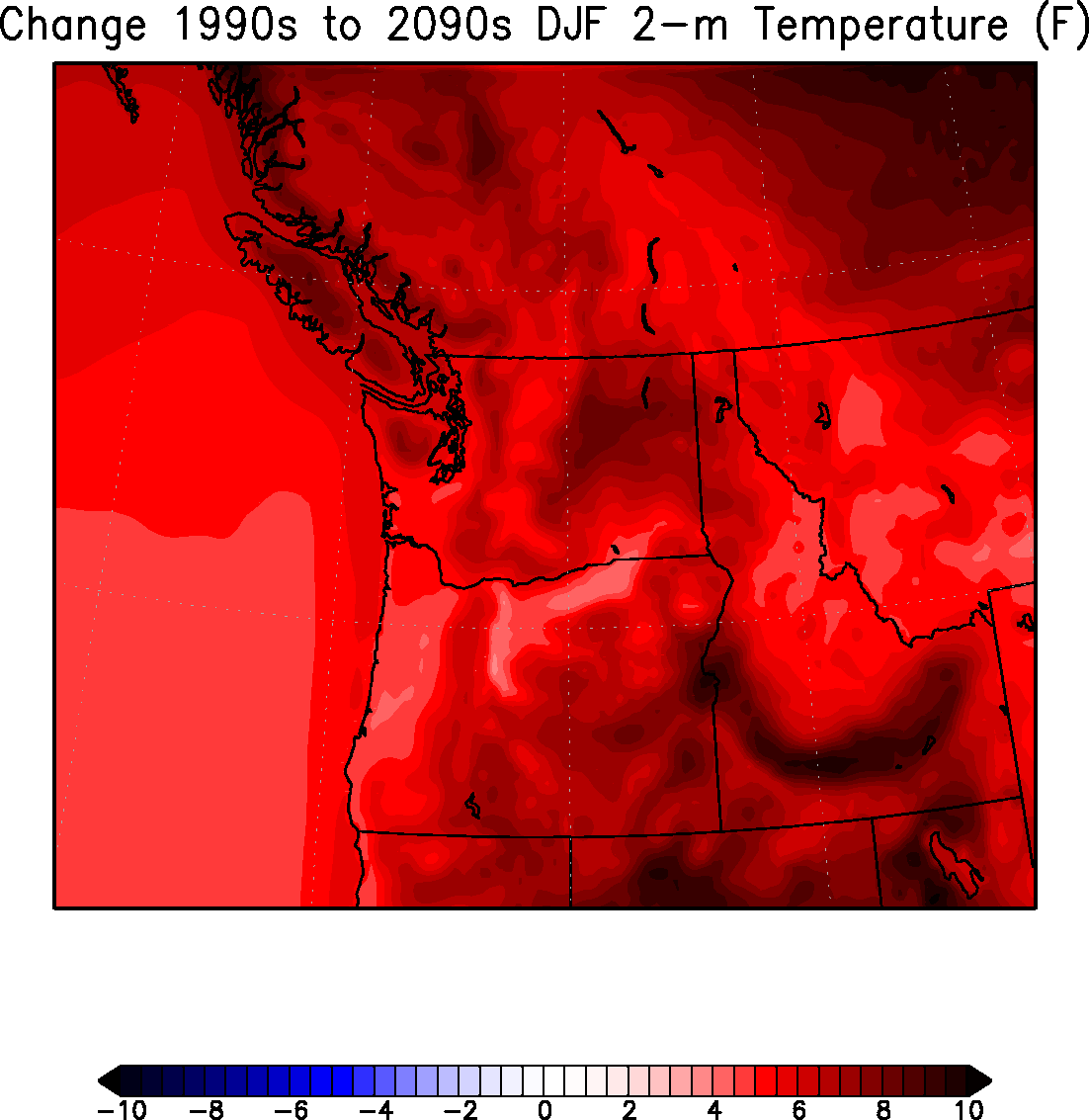
A major group project has been to
run WRF for extended periods forced by global climate
models in order to determine the regional implications
of global warming. This figure shows the predicted
change in winter surface temperatures between the 1990s
and the end of the 21st century.
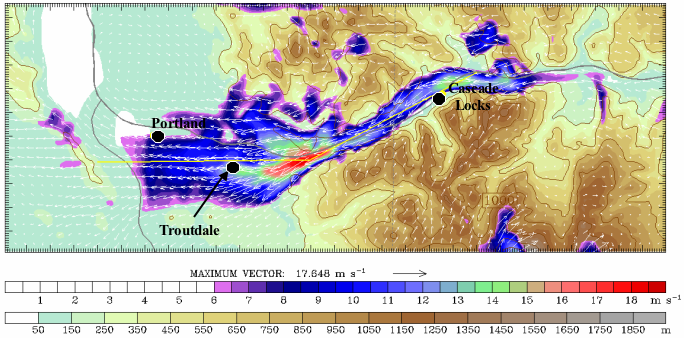
High-resolution MM5 and WRF
simulations, down to 1.3 km grid spacing, are being used
to understand the structure and origin of orographically
produced weather features. This image show simulated winds
exiting the Columbia Gorge, the only near sea level gap
across the Cascade Mountains. Note the strong winds
developing over the western exit.
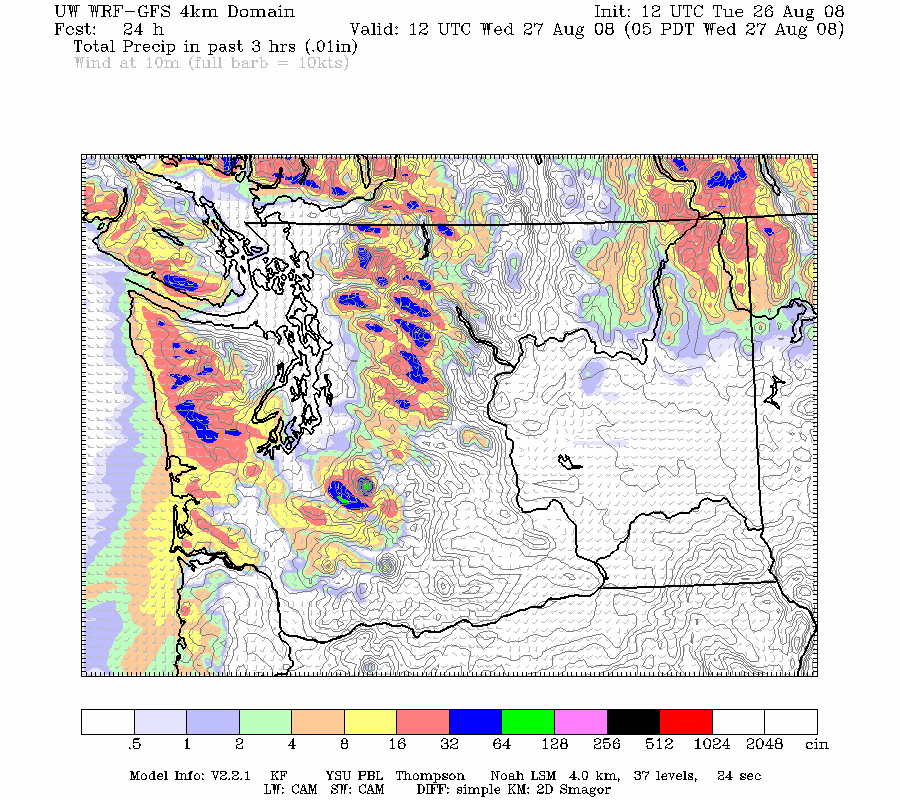
An important activity of the group is
to run a real-time WRF and MM5 mesoscale prediction system
down to 1.3-km grid spacing. This modeling system serves
as a platform for testing model improvements. This image
shows a three-hour precipitation forecast from a small
portion of the 4-km domain.
Another activity has been to test new
observing technologies, such as pressure observations in
smartphones and lightning data from the UW WWLLN network.
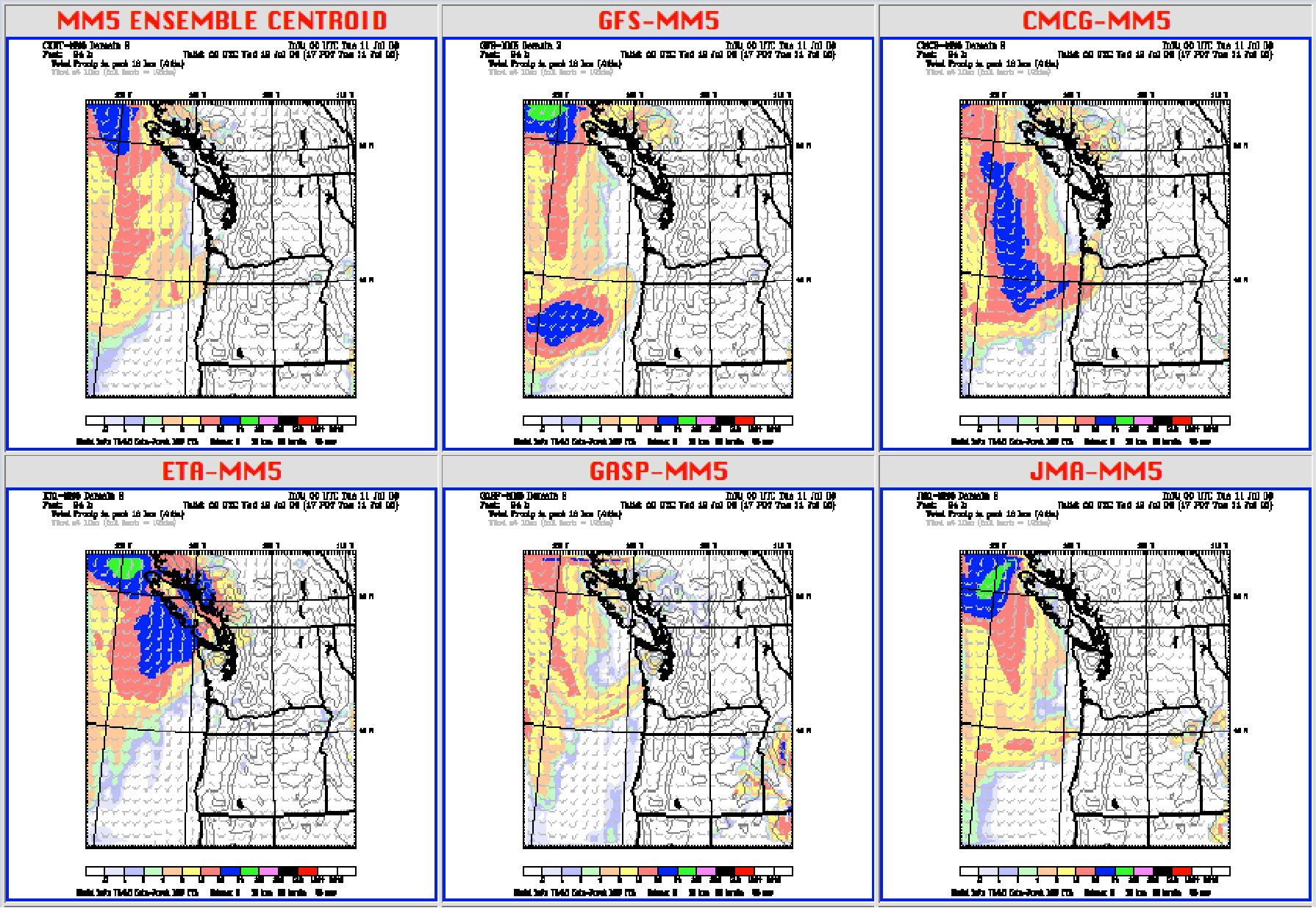
The group maintains two different
real-time mesoscale ensemble systems for studying
probabilistic weather prediction and data assimilation,
including an EnKF data assimilation system. This image
shows precipitation from six members of the UWME ensemble
prediction system.